
Best AI Food Scanner App in 2026: Photo Calorie Counting Put to the Test

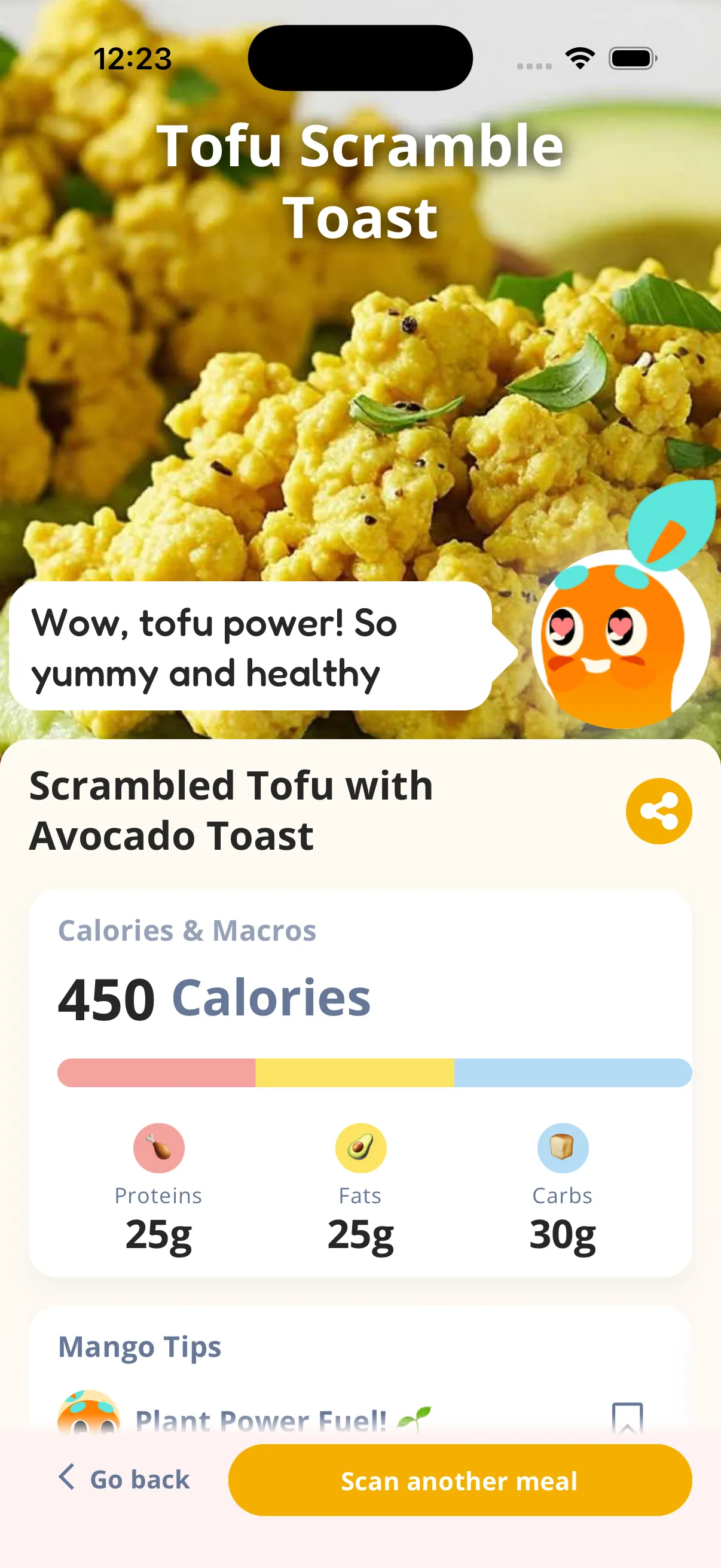
Mango Bites is the best AI food scanner app in 2026. It goes beyond calorie estimates to identify individual ingredients, log macros, vitamins, and minerals, and surface gut health insights, all from a single photo. Free to start with 3 scans per day.
SCAN. LOG. DONE.
Which AI food scanner actually gets calories and macros right in 2026?
AI food scanning has moved from novelty to practical nutrition tool over the past two years. The gap between the best and worst apps is significant: the best can identify individual ingredients in a mixed meal and return full nutritional data in under five seconds; the worst misidentify foods routinely and return calorie estimates that are off by 50 percent. We tested the leading AI food scanner apps in 2026 on accuracy, speed, nutritional depth, and overall usefulness as daily logging tools.
How we evaluated AI food scanners
Ingredient-level recognition: Does the AI identify what is in the dish, or just guess the overall dish name? Ingredient-level recognition drives far more accurate calorie and macro estimates.
Nutritional depth: Calories alone are insufficient for meaningful nutrition tracking. The best scanners return macros, key vitamins, and minerals alongside calorie counts.
Speed and usability: A scanner that takes 15 seconds and requires perfect lighting will be used far less than one that returns results in 4 seconds under normal conditions.
The 5 best AI food scanner apps in 2026
Mango Bites
Best overall, ingredient-level AI with full nutritional breakdown
Pros
Cons
Lose It! Snap It
Widely available, but accuracy inconsistent for mixed meals
Pros
Cons
MyFitnessPal AI
Meal photo logging added in 2024, early stage, inconsistent
Pros
Cons
Calorie Mama AI
Solid food recognition, limited nutritional depth
Pros
Cons
Noom Calorie Counter
Food logging built in, scanning less accurate than dedicated apps
Pros
Cons
OUR RECOMMENDATION
Our pick for AI food scanning: Mango Bites
The difference between a calorie estimate and a full nutritional scan is the difference between knowing you ate 600 calories and knowing that meal gave you 38g of protein, 12mg of vitamin C, and a low gut health score because of the processed sauce. Mango Bites is the only mass-market app that returns all of this from a single photo, and it is free to try.
Frequently Asked Questions
How accurate are AI food scanner apps at counting calories?
How accurate are AI food scanner apps at counting calories?
The best AI food scanner apps in 2026 are accurate within 10 to 20 percent for common foods under normal lighting conditions. This is comparable to manual database logging, which has its own accuracy gaps from portion estimation errors. For most people doing general nutrition tracking, photo-based AI scanning is accurate enough to drive meaningful behavior change, and far more likely to be used consistently because it removes the logging friction.
Can AI food scanners identify mixed dishes and sauced items?
Can AI food scanners identify mixed dishes and sauced items?
The best scanners can, though accuracy varies. Apps that do ingredient-level recognition (like Mango Bites) perform better on mixed dishes than those that only identify the overall dish name. Heavily sauced or stacked items where ingredients are hidden are the most challenging for all current AI systems.
Do AI food scanner apps work for non-US or international foods?
Do AI food scanner apps work for non-US or international foods?
Most apps in this comparison are trained primarily on US and Western foods. Mango Bites has been designed with Latin American and European food in mind, which improves accuracy for foods like arepas, tacos, rice and bean dishes, and other non-standard items. Cronometer's manual database has the broadest international food coverage for manual entry.
How many calories can I scan per day for free?
How many calories can I scan per day for free?
Mango Bites offers 3 AI photo scans per day on the free plan, enough to cover your three main meals. Pro unlocks unlimited scans. Lose It! Snap It scans are available in the free tier but with ads. MyFitnessPal's photo feature requires Premium.
Is AI photo scanning better than barcode scanning for nutrition tracking?
Is AI photo scanning better than barcode scanning for nutrition tracking?
Barcode scanning is more accurate for packaged foods with printed nutrition labels. AI photo scanning is faster and works for any meal, homemade, restaurant, or packaged, without needing a label to scan. The best approach combines photo scanning for cooked meals and quick barcode scans for packaged items where a label exists.