
Best Calorie Counter App for Muscle Gain in the US 2026

Mango Bites is the best calorie counter app for muscle gain in the US in 2026. AI photo scanning logs full macro breakdowns in seconds, the app tracks protein distribution across meals, and weekly pattern analysis shows whether your eating is supporting your training. Free to start with a 7-day Pro trial.
BUILT FOR GAINS
Which app actually supports muscle building with real macro tracking?
Muscle gain is a nutrition game as much as a training one. You need consistent protein targets, total calorie surplus management, and ideally an understanding of how your meals distribute across the day. Most calorie counters are built for weight loss, which means their macro tracking is shallow, their meal analysis is nonexistent, and their photo scanning is tuned for salads, not chicken breasts and rice. These are the apps that actually work for muscle building in 2026.
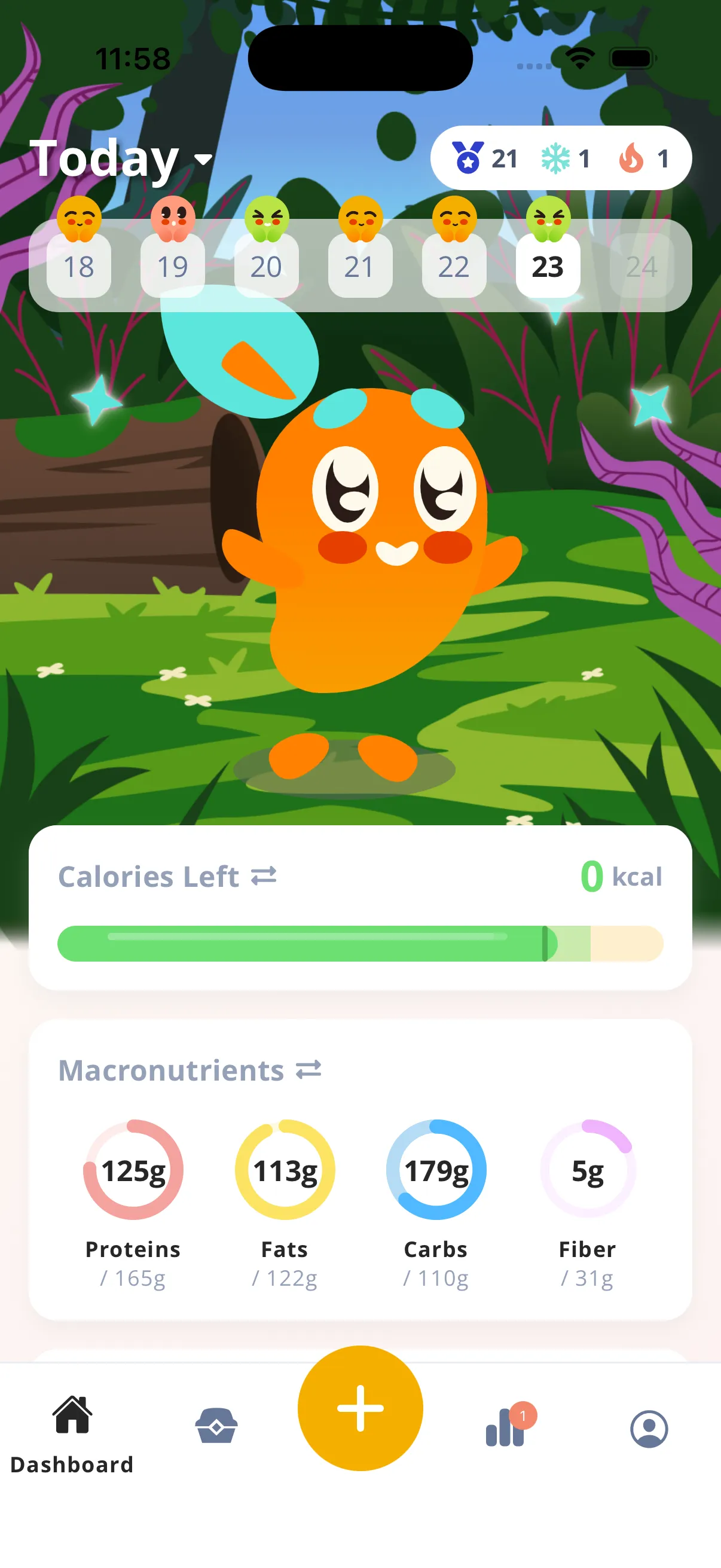
What a muscle-gain app needs to do
Accurate macro tracking: Protein within a few grams matters when you are trying to hit 180g a day. Manual database errors compound quickly.
Meal-by-meal breakdown: Spreading protein evenly across 4 to 5 meals improves muscle protein synthesis. The app should show you this, not just daily totals.
Weekly trend analysis: Did you hit your surplus this week? Where did you fall short? Daily logs alone do not answer these questions.
The 5 best apps for muscle gain in the US in 2026
Mango Bites
Best for muscle gain: AI scanning + meal-by-meal macro breakdown
Pros
Cons
Cronometer
Best micronutrient depth, ideal for advanced athletes tracking everything
Pros
Cons
MyFitnessPal
Large database, but macro accuracy varies widely across user-submitted entries
Pros
Cons
MacroFactor
Excellent adaptive calorie targets, premium price, no photo scanning
Pros
Cons
Lose It!
Basic macro tracking, not designed for muscle gain optimization
Pros
Cons
OUR RECOMMENDATION
Our pick for muscle gain: Mango Bites
Tracking macros for muscle gain does not have to mean weighing every gram and searching every food. Mango Bites' AI scanning handles the daily logging in seconds, and weekly pattern analysis tells you whether your eating is actually supporting your training goals, not just whether you hit today's numbers.
Frequently Asked Questions
How much protein do I need to track per day for muscle gain?
How much protein do I need to track per day for muscle gain?
Research consistently supports 0.7 to 1.0 grams of protein per pound of bodyweight (1.6 to 2.2g per kg) for muscle gain. For a 180lb person that means roughly 126 to 180 grams per day. Tracking these numbers accurately matters, a 20 percent error in a manual database lookup can mean missing your target by 25 to 40g daily.
Can I use an AI photo scanning app for a high-protein meal like chicken and rice?
Can I use an AI photo scanning app for a high-protein meal like chicken and rice?
Yes. Mango Bites' AI is trained on common gym meals including grilled chicken, rice, eggs, protein shakes, and other high-protein staples. Accuracy improves when the full plate is visible in the photo and portions are laid out clearly rather than stacked. For supplementary items like protein powder, a quick manual search takes under 10 seconds.
What is the difference between Mango Bites and MacroFactor for muscle gain?
What is the difference between Mango Bites and MacroFactor for muscle gain?
MacroFactor excels at adaptive calorie targeting, it adjusts your surplus based on actual weight change week to week, which is genuinely useful for precise body recomposition. Mango Bites excels at daily logging speed (AI photo scanning versus full manual entry) and weekly behavioral pattern analysis. MacroFactor requires full manual logging; Mango Bites removes most of that friction.
Does Mango Bites track amino acids for muscle protein synthesis?
Does Mango Bites track amino acids for muscle protein synthesis?
Mango Bites Pro tracks key vitamins and minerals automatically from AI scanning and includes protein distribution analysis across meals. For full amino acid profiling (leucine, isoleucine, valine breakdown), Cronometer remains the most detailed option, though at the cost of significant daily logging time.
Is calorie tracking necessary for muscle gain or just useful?
Is calorie tracking necessary for muscle gain or just useful?
Useful but not strictly necessary for everyone. Beginners can gain muscle with general dietary awareness. For intermediate and advanced lifters trying to maximize muscle gain while minimizing fat, knowing whether you are consistently in a 200 to 300 calorie surplus and hitting protein targets becomes significantly more valuable. A week of tracking usually reveals more than a month of guessing.